Guides
-
What is product discovery?
Sector:
All
Timeline:
2–4 weeks
What is product discovery and why does it matter before design?
Product discovery helps teams understand real user problems, align on priorities, and reduce risk before designing or building digital products or services.
Three key methods used in this
guide
Discovery
User research
Problem framing
Why teams struggle before design even begins
Most digital projects do not fail because of poor design or weak development. They fail because teams move too quickly into solutions without fully understanding the problem they are trying to solve.
In many organisations, especially in government and community settings, there is constant pressure to “fix the website” or “improve the online service.” Complaints increase, users abandon forms, and internal teams feel the strain of supporting tasks that should be easy to complete online. The natural response is to redesign pages, rebuild forms, or introduce new features as quickly as possible.
While this feels productive, it often skips an essential step: understanding what is actually getting in the way for users.
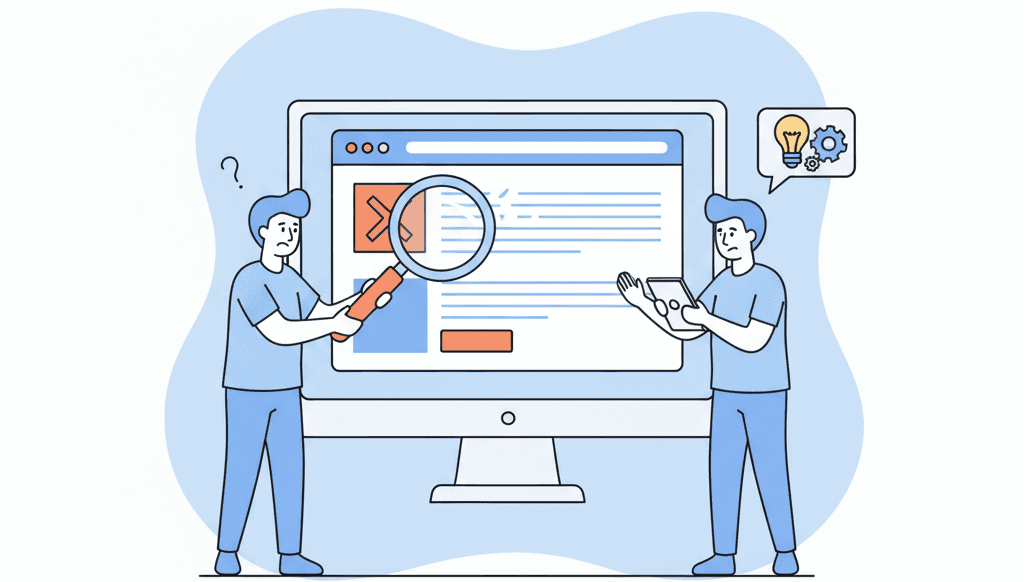
Product discovery exists to slow things down just enough to make better decisions. It creates space to understand real user needs, organisational goals, and technical realities before design or development begins. As shown in the image, product discovery sits at the intersection of user needs, business goals, and technical constraints. Real value only emerges when all three are considered together.
Without this shared understanding, teams risk investing time and money into changes that look good but do not improve outcomes.
What happens when discovery is skipped or rushed
When product discovery is skipped, teams tend to rely on assumptions rather than evidence. Internal opinions, legacy approaches, or the loudest stakeholder in the room shape decisions. What feels logical internally often does not reflect how users actually experience the service.
This creates a pattern in which effort is spent on the wrong things. Features are added, pages are redesigned, and content is rewritten, yet the core issues remain. Users still get confused, drop off, or avoid the service altogether. The result is frustration on both sides — users feel unsupported, and teams feel that nothing they do makes a difference.
Another common issue is timing. Problems that could have been identified early only surface during development or after launch, when changes are far more expensive and disruptive. At that point, teams are forced to make compromises rather than thoughtful improvements.
Perhaps most damaging is the lack of alignment. Without discovery, different teams often hold different views of the problem. This slows decision-making, weakens confidence, and makes it harder to justify choices to leadership.
Ultimately, skipping discovery does not save time. It simply moves risk further down the line, where it is harder to manage and more costly to fix.
How product discovery works and why it matters
Product discovery is a structured way to learn before committing to design or build. Its purpose is not to produce polished outputs, but to reduce uncertainty and increase confidence in decisions.
The process begins by clearly defining the problem. This means understanding what users are trying to achieve, where they are getting stuck, and why existing solutions are not working. It also involves clarifying what success looks like — not just for the organisation, but for the people using the service.
At this stage, teams often review existing data such as analytics, support enquiries, and stakeholder insights. This helps create a shared baseline before engaging directly with users.
Talking to users is a core part of product discovery, but it does not need to be complex or large-scale. Short conversations, task walkthroughs, or usability observations can quickly reveal patterns. These insights help teams confirm whether a problem is real, how often it occurs, and whether it is worth solving. As highlighted in the image, discovery helps teams validate assumptions early, rather than discovering issues after launch.
Product discovery also helps teams balance user needs with organisational goals and constraints. In public and community organisations, this balance is especially important. Accessibility requirements, policy constraints, legacy systems, and operational realities must be considered from the start. Discovery ensures these factors are acknowledged early, rather than treated as blockers later.
Rather than jumping straight into high-fidelity designs, discovery encourages early exploration. Simple sketches, basic flows, or low-effort prototypes are used to explore ideas and test thinking. The image reinforces this idea: learning early and cheaply reduces the risk of committing to the wrong solution.
A key strength of product discovery is assumption testing. Every project begins with assumptions about user behaviour, understanding, and trust. Discovery turns those assumptions into questions and tests them before they become embedded in design or code. This is particularly valuable for forms, transactions, and multi-step services, where small points of confusion can completely stop users.
Just as importantly, product discovery aligns teams around evidence. When stakeholders see the same user insights and patterns, conversations shift from opinion-based debates to shared understanding. This makes decisions clearer and builds confidence before design begins.
By the end of product discovery, teams should have a clear definition of the problem, a shared understanding of user needs, and a clear direction for next steps. Design and development then become more efficient, because they are grounded in evidence rather than guesswork.
Why product discovery is especially valuable for public and community teams
For public sector and community organisations, product discovery offers a practical way to improve services without unnecessary rebuilds. It helps teams focus limited budgets on changes that matter, supports accessibility and inclusion from the outset, and provides evidence to support decisions and funding requests.
Most importantly, it helps create services that feel clearer and more trustworthy for the people who rely on them.
When product discovery is the right next step
Product discovery is most valuable when teams feel uncertain. This might be when complaints are increasing, users are dropping off, or stakeholders disagree on what should be fixed first. It is also a strong starting point when a redesign is being considered, but the real issues are not yet clear.
If a team is asking, “What problem are we actually trying to solve?”, product discovery is usually the right next step.
Product discovery is not a theoretical UX exercise. It is a practical way to reduce risk, build shared understanding, and make confident decisions before investing time and money.
By learning first and building second, teams create digital services that work better for real people and avoid repeating the same problems.
You might find these helpful
A few related articles that build on what you’ve just read.